Periodic Table Reference
Chemistry becomes so much easier when you have the right reference within reach. Whether you are a high school student preparing for exams, a college learner working through lab reports, or a teacher planning tomorrow’s lesson, the periodic table sits at the heart of almost every chemistry topic you will meet. Our free periodic table reference puts all 118 elements on your screen in a clean, color-coded layout that you can explore in seconds, with every key fact just a tap away.
Look up atomic numbers, symbols, names, atomic masses, categories, groups, periods and electron configurations without flipping through a heavy textbook or squinting at a tiny printed chart. Everything runs right in your browser, so there is nothing to download and nothing to install. The tool works smoothly on phones, tablets and desktop computers, which means your element data is always close at hand during homework, revision sessions and lab work.
Picture this common scene. It is late evening, your chemistry exam is tomorrow, and a practice question asks for the electron configuration of chromium. Instead of digging through three chapters of notes, you open the reference, type the name, and have the answer in five seconds. That is the kind of calm, confident studying this tool makes possible every day. Use our free periodic table reference online whenever you need fast, trustworthy facts about any element, from hydrogen all the way to oganesson.

How to Use Periodic Table Reference
There is no learning curve here. If you have ever used the printed periodic table in a textbook, you already know how this works, because the layout follows the same classic arrangement of groups and periods. The difference is pure speed: search, tap and trend views do in seconds what used to take minutes of page flipping. Walk through the steps below once, and you will be looking up elements like a pro.
- Open the tool in your browser. Head to the Periodic Table Reference page on A Tool Today from any device you own. There is no signup form, no download and no waiting room. The full table appears the moment the page loads, with all 118 elements arranged exactly where your chemistry teacher expects them to be.
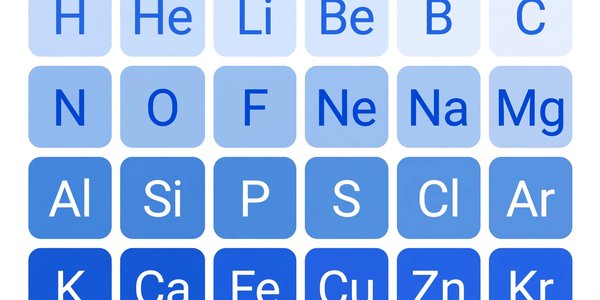
- Browse the color-coded table. Every element is arranged by atomic number in the familiar groups and periods layout you know from class. Colors mark the major categories such as alkali metals, alkaline earth metals, transition metals, metalloids, nonmetals, halogens and noble gases. These colors are more than decoration. They train your eyes to see family relationships, so trends start feeling intuitive instead of memorized.
- Click any element for full details. Tap or click a tile to open its detail card. You will see the atomic number, symbol, full name, atomic mass, category, group, period and electron configuration. That single card answers nearly every factual question that homework and exams throw at you, from simple symbol recall to deeper questions about valence electrons and bonding.
- Search by name, symbol or number. Type into the search box to jump straight to the element you need. Typing iron, Fe or 26 all take you to the same card, which saves precious time when you are in the middle of an assignment and your train of thought cannot afford a detour through a textbook index.
- Explore trends across the table. Switch on trend views to see how atomic radius, electronegativity and ionization energy change across periods and down groups. Watch electronegativity climb from left to right, or atomic radius shrink across a period, and suddenly the rules in your textbook turn into pictures you can actually remember on exam day.
- Keep it open while you study. Bookmark the page or pin the tab during revision sessions and lab write-ups. Having the table one click away beats hunting through textbook appendices every time a question mentions an unfamiliar element, and the seconds you save on each lookup add up to real study time.

Key Features
Every part of the tool is designed for speed and clarity. Nothing here is decorative. Each feature exists because students and teachers asked for it, and each one earns its place. Here is what you get when you open the reference.
- All 118 elements in one place. From hydrogen at number 1 to oganesson at number 118, every known element is included with up-to-date data. You will never hit a frustrating gap in the middle of a study session, no matter how obscure the element in your question turns out to be.
- Interactive element tiles. Each tile shows the atomic number, symbol and name at a glance, keeping the whole table scannable in seconds. Clicking or tapping opens a full detail card, so the main view stays clean while deeper data remains exactly one click away whenever you need it.
- Color-coded categories. Metals, nonmetals, metalloids, alkali metals, alkaline earth metals, transition metals, halogens and noble gases each get their own distinct color. The visual grouping helps you spot family relationships instantly, which is half the battle in mastering periodic trends for exams.
- Fast search by name, symbol or number. The search box understands all three formats without any special syntax to learn. Whether you remember gold, Au or 79, you land on the right element immediately, with no scrolling through the entire table to find one tile.
- Electron configurations and shells. Each detail card includes the full electron configuration plus the shell arrangement. This is a lifesaver for questions about valence electrons, ion formation and bonding behavior, topics that show up on nearly every chemistry exam you will ever take.
- Trend visualizations. Built-in views show how properties like atomic radius, electronegativity and ionization energy shift across the table. Seeing the pattern as a visual beats memorizing a list of rules, and visual memories tend to survive exam pressure far better than memorized sentences.
- Mobile-friendly design. The table adapts gracefully to small screens without losing readability. Scroll, pinch and tap through elements comfortably on your phone during class, on the bus, or while waiting for lab equipment to free up between experiments.
- Clean and simple layout. No clutter, no confusing menus, and no ads covering the elements you came to see. Just the table, the search box and the detail cards, arranged the way students and teachers already expect from years of classroom charts.
Why Use Our Periodic Table Reference?
The periodic table is the single most consulted reference in all of chemistry, and most students reach for it every single week of the course. Yet printed charts slowly go out of date, textbook appendices are awkward to flip to mid-problem, and photos of classroom posters turn into blurry messes on a phone screen. Our online reference solves all of that at once. It loads in seconds, stays current, and puts search plus detail views exactly where your thumb expects them.
Speed matters enormously when you are learning. Every minute spent hunting for an atomic mass is a minute not spent understanding the actual chemistry behind the question. With instant search and one-tap detail cards, you get your answer and return to the problem right away. Over a full semester, those saved minutes add up to hours of extra practice, and extra practice is often the quiet difference between a good grade and a great one.
Teachers benefit just as much as students do. Project the table in class to walk everyone through trends, pull up element details during live discussions, or set quick lookup warm-ups that take seconds to prepare. Because the tool is free and needs no accounts, every student can open the same reference on their own device, with no IT headaches, no permission slips and no forgotten passwords slowing the lesson down.
Finally, because A Tool Today hosts this reference alongside other free study tools, your periodic table sits one click away from flashcard makers, quiz generators and vocabulary builders. Your complete study setup lives in one convenient place, ready whenever you are and on whatever device you happen to have at hand.
Tips for Best Results
A reference tool is only as good as the study habits around it. These tips come from watching how successful students actually use periodic tables, and they will help you squeeze more learning out of every visit.
- Learn the table in chunks. Do not try to memorize all 118 elements in one heroic session. Focus on one group or period at a time, such as the alkali metals or period 3, and use the detail cards to quiz yourself on symbols and numbers until they feel automatic. Small wins compound into big knowledge.
- Study trends, not just isolated facts. Use the trend views to understand why atomic radius shrinks across a period or why electronegativity rises from left to right. Understanding the reason behind the numbers makes them stick far longer than rote memorization ever could, especially under exam stress.
- Connect each element to real life. When you look up an element, note one everyday use, like sodium in table salt, iron in construction steel, or silicon in computer chips. Real-world links give your brain extra hooks to hang facts on, and hooked memories are the ones you actually keep.
- Keep the reference open during practice problems. Look up atomic masses and configurations exactly when the question demands them. This just-in-time lookup builds familiarity naturally, without separate boring memorization drills that feel disconnected from real problems.
- Compare neighboring elements deliberately. Click through the elements of one group and notice what they share, then compare two adjacent periods. This habit trains the pattern recognition that exam questions love to test, particularly in trend-based and prediction questions.
- Bookmark it on every device you use. Add the page to your phone home screen, your tablet bookmarks and your desktop bookmarks bar. The students who look things up fastest are usually the ones who keep the reference closest, and fast lookups keep study momentum alive.
Frequently Asked Questions
Is the periodic table reference really free?
Yes, completely free with no catches attached. You can use our free periodic table reference online as often as you like, with no account, no trial period and no hidden limits. A Tool Today keeps its education tools free for every student and teacher, because learning resources should never sit behind a paywall. Open the page and start exploring. That is the entire process.
How many elements are included?
All 118 confirmed elements are included, from hydrogen at atomic number 1 to oganesson at atomic number 118. Each element comes with its atomic number, symbol, full name, atomic mass, category, group, period and electron configuration. That covers everything a typical high school or college course requires, including the newer superheavy elements that many printed charts still miss.
Complete List of All Free Online Tools
Browse the full directory of 450+ free tools. Click any tool name to use it instantly - no signup required.
| # | Tool Name | Category |
|---|---|---|
| 1 | A B Test Significance Calculator | Calculators & Converters |
| 2 | Acronym Generator | Utility Tools |
| 3 | Ad Copy Generator | Utility Tools |
| 4 | Add Page Numbers To PDF | PDF Tools |
| 5 | Add Subtitles To Video | Media Tools |
| 6 | Add Subtract Days Calculator | Calculators & Converters |
| 7 | Age Calculator | Calculators & Converters |
| 8 | Angle Converter | Calculators & Converters |
| 9 | API Request Tester | Utility Tools |
| 10 | Area Converter | Calculators & Converters |
| 11 | Article Rewriter | Utility Tools |
| 12 | Audio Converter | Calculators & Converters |
| 13 | Audio Merger | Media Tools |
| 14 | Audio Metadata Editor | Media Tools |
| 15 | Audio Pitch Changer | Media Tools |
| 16 | Audio Speed Changer | Media Tools |
| 17 | Audio To Text Converter | Calculators & Converters |
| 18 | Audio Trimmer | Media Tools |
| 19 | Avatar Maker | Utility Tools |
| 20 | Background Remover | Utility Tools |
| 21 | Backlink Checker | SEO Tools |
| 22 | Banner Maker | Utility Tools |
| 23 | Barcode Generator | Developer Tools |
| 24 | Base64 Encoder Decoder | Developer Tools |
| 25 | Bass Booster | Utility Tools |
| 26 | Bibliography Generator | Utility Tools |
| 27 | Bill Splitter | Utility Tools |
| 28 | Binary Converter | Calculators & Converters |
| 29 | Binary To Text Converter | Calculators & Converters |
| 30 | Birthday Countdown | Date & Time Tools |
| 31 | Bmi Calculator | Calculators & Converters |
| 32 | Bmr Calculator | Calculators & Converters |
| 33 | Body Fat Calculator | Calculators & Converters |
| 34 | Body Surface Area Calculator | Calculators & Converters |
| 35 | Book Title Generator | Utility Tools |
| 36 | Brand Color Finder | Color Tools |
| 37 | Brand Kit Generator | Utility Tools |
| 38 | Break Even Calculator | Calculators & Converters |
| 39 | Broken Link Checker | Utility Tools |
| 40 | Browser Info Checker | Utility Tools |
| 41 | Budget Planner | Utility Tools |
| 42 | Business Card Designer | Utility Tools |
| 43 | Business Card Maker | Utility Tools |
| 44 | Business Days Calculator | Calculators & Converters |
| 45 | Business Name Generator | Utility Tools |
| 46 | Business Proposal Generator | Utility Tools |
| 47 | Button Generator | Utility Tools |
| 48 | Buyer Persona Generator | Utility Tools |
| 49 | Calorie Calculator | Calculators & Converters |
| 50 | Captcha Generator | Utility Tools |
Is the element data accurate and up to date?
Yes. The data follows the standard values used in chemistry education, including the current atomic weights accepted by the scientific community. Whenever official values are revised, the tool is updated to match, so you always study from reliable numbers you can trust on exams, quizzes and lab reports.
Can I use it on my phone?
Absolutely. The reference is fully responsive and works on phones, tablets, laptops and desktop computers. Tiles stay easy to tap and detail cards stay easy to read even on smaller screens. Many students keep it open on their phones during homework, which turns idle moments into quick revision opportunities.
Does it show electron configurations?
Yes. Every element detail card includes the full electron configuration along with the shell arrangement. This makes revision on bonding, valence electrons, ion formation and periodic trends much simpler, since the key data is always one tap away instead of buried in a textbook appendix.
Do I need to create an account?
No account is needed at all. Just open the page and start exploring the table immediately. There is nothing to sign up for, no personal details to enter, and no email verification standing between you and your chemistry revision. Your study flow stays completely uninterrupted.
Can teachers use it in the classroom?
Definitely. The tool works beautifully on projectors and smartboards for live demonstrations of trends and element properties. Since it is free with no login required, students can follow along on their own devices in seconds. That makes interactive lessons, quick quizzes and group lookup activities easy to run in any classroom.
Is it suitable for beginners learning chemistry?
Yes, it is ideal for beginners. The familiar table layout matches what textbooks show, the color coding makes element families obvious at a glance, and the search box means you never need to know where an element sits before you can find it. Start with the elements from your current chapter and expand outward as your course progresses.
Table of Contents
What is Periodic Table Reference?
The periodic table reference is a free online tool that helps you with periodic table reference tasks quickly and accurately. Our periodic table reference is designed to be simple, fast, and reliable. Whether you need a periodic table reference for personal use or professional work, this free periodic table reference delivers instant results without any signup or download required.
How to Use the Periodic Table Reference
Using our periodic table reference is easy. Simply open the periodic table reference tool above, enter your input, and get instant results. The periodic table reference processes everything in your browser for maximum privacy and speed. No technical knowledge is needed to use this periodic table reference effectively.
Benefits of Using Our Periodic Table Reference
Our free periodic table reference offers many advantages. It is completely free to use, requires no registration, works on all devices, and provides accurate results instantly. The periodic table reference is updated regularly to ensure the best performance. For more information about periodic table reference, you can Learn more about periodic table reference on Wikipedia.
Frequently Asked Questions About Periodic Table Reference
Is the periodic table reference really free? Yes, our periodic table reference is 100% free with no hidden costs or premium tiers.
Do I need to create an account to use the periodic table reference? No, the periodic table reference works instantly without any signup or login required.
