Frequency Converter
Frequency is the heartbeat of modern technology. It tells you how many times something repeats every second, and it shows up in places you might not expect. Your home WiFi broadcasts at 2.4 or 5 gigahertz. The power coming out of your wall socket alternates at 50 or 60 hertz depending on your country. A middle C note on a piano vibrates at about 261.6 hertz, and your computer’s processor ticks several gigahertz. The trouble is that these values span an enormous range, from a fraction of a hertz in ocean tides to terahertz in infrared light, so engineers constantly jump between hertz, kilohertz, megahertz, and gigahertz. Doing that math by hand means counting zeros, and one miscounted zero turns a correct answer into a disaster. The Frequency Converter from A Tool Today handles the translation instantly and exactly. Enter any frequency, pick your units, and get a precise result in a heartbeat. Electronics students use it for circuit homework, musicians use it to understand pitch and tuning, radio hobbyists use it when programming transceivers, and IT professionals use it when comparing wireless specs. It is free, unlimited, and needs no signup, running right in your browser on any device.
What makes frequency conversion especially error prone is the sheer scale of the prefixes. Kilo means a thousand, mega means a million, and giga means a billion, so misreading 2.4 gigahertz as 2.4 megahertz understates the real value by a factor of a thousand. That kind of mistake in a circuit design or a wireless plan can mean equipment that simply does not work. The Frequency Converter removes the zero counting entirely. Whether you are translating a radio station’s 101.5 megahertz into kilohertz, checking that a 60 hertz appliance matches your country’s 50 hertz grid, or converting a processor’s gigahertz rating for a class assignment, the tool gives you the exact number with clean formatting. No mental arithmetic, no misplaced decimal points, and no second guessing.
How to Use the Frequency Converter
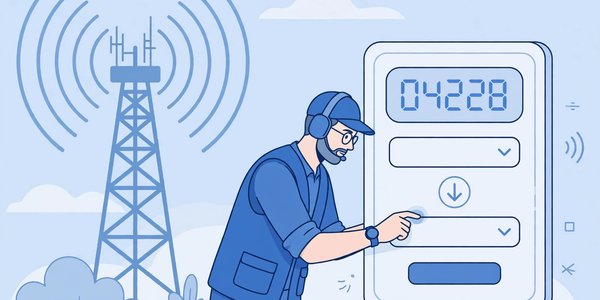
Converting frequency is a three step job: enter your number, tell the tool what unit it is in, and tell it what unit you want. The walkthrough below covers each step so your first conversion is correct.
If you are new to frequency units, think of hertz as the base unit, meaning cycles per second, with larger units just adding zeros. One kilohertz is a thousand hertz, one megahertz is a million, and one gigahertz is a billion. The converter knows all of these relationships, so you only need to pick from the dropdowns.
- Open the Frequency Converter. Visit the Frequency Converter page on A Tool Today from any browser. It loads instantly on phones, tablets, and desktops with nothing to install and no account to create first.
- Type in your frequency value. Enter the number exactly as you see it on your spec sheet, homework problem, or device label. Decimals are fully supported, so 101.5, 2.4, and 0.5 are all fine. If your source uses scientific notation like 2.4e9, just type the expanded number instead.
- Choose the starting unit. Open the “from” dropdown and select the unit your value is currently expressed in: hertz, kilohertz, megahertz, gigahertz, or terahertz. Also check for rotations per minute or degrees per second if you are working with mechanical frequencies. Picking the right starting unit is the single most important step.
- Choose the target unit. Open the “to” dropdown and pick the unit you need. Comparing WiFi channels listed in gigahertz against a router spec in megahertz? Choose megahertz. Doing physics homework that expects kilohertz? Choose kilohertz. The result appears the moment both units are set.
- Read your converted result. The answer displays immediately in a clean, readable format. Large jumps, like gigahertz to hertz with nine extra zeros, are formatted so you can actually read them without losing count. Copy the value straight into your notes, code, or report.
- Swap or convert more values. The swap button reverses your units instantly for back and forth comparisons. Type a new number any time to convert again. There are no limits, so work through entire frequency tables for free.
Once you have the basic rhythm down, the converter slots into real workflows effortlessly. Radio amateurs keep it open while programming memories into a transceiver. Students use it beside circuit simulation homework. Musicians and audio engineers convert between hertz and kilohertz when reading equipment specs. Because every result is instant, the tool never breaks your concentration the way manual zero counting does.
Key Features
Frequency spans more orders of magnitude than almost any other everyday measurement, so a converter has to be both precise and readable across that entire range. Here is what this one delivers.
- Instant answers: Results recalculate live with every keystroke and dropdown change. No submit button, no waiting, which keeps you in flow during homework or bench work.
- Full prefix coverage: Convert between hertz, kilohertz, megahertz, gigahertz, and terahertz seamlessly. The tool also handles millihertz and microhertz for slow phenomena like tides and biological rhythms.
- Mechanical frequency units: Rotations per minute (RPM), rotations per second, and degrees per second are supported, which is handy for motors, turntables, and rotating machinery specs.
- Zero counting eliminated: The converter handles the powers of ten exactly, so a gigahertz to hertz conversion lands on precisely the right number of zeros every time. This alone prevents the most common frequency errors.
- Readable large numbers: Results with many digits are formatted cleanly so you can verify them at a glance instead of squinting at a string of zeros.
- Free with no caps: Convert one frequency or a thousand. There are no quotas, no premium tier, and nothing locked behind registration.
- No signup, private by design: Everything runs in your browser. No account, no email, no tracking of your conversions.
- Mobile ready: The responsive layout works on any phone, so you can convert frequencies at the workbench, in the studio, or in the field.
Why Use Our Frequency Converter?
Frequency units punish carelessness more than most measurements because the prefixes look so similar. Megahertz and gigahertz differ by a single letter but represent a thousandfold difference in reality. In electronics, that gap is the difference between a circuit that works and one that is hopelessly mistuned. In wireless networking, confusing the two means buying equipment for the wrong band entirely. Our Frequency Converter makes these distinctions automatic and exact, so the similar looking prefixes can never trick you.
Students meet this challenge in physics and electronics courses, where problems freely mix hertz, kilohertz, and megahertz and expect you to track the conversions yourself. It is tedious, and it is exactly where exam points get lost, not on the concept but on a dropped zero. A fast converter lets you verify each step and keep your attention on understanding resonance, bandwidth, and signal behavior instead of arithmetic. Hobbyists benefit just as much. Whether you are setting up amateur radio equipment, building guitar effects pedals, or overclocking a computer, correct frequency math is the difference between a working project and a frustrating afternoon.
Professionals rely on it for speed and confidence. An IT technician comparing access point specs, an audio engineer matching sample rates, or a technician verifying that imported equipment suits the local 50 or 60 hertz mains supply all need quick, trustworthy numbers. A Tool Today built this converter to be the fastest reliable option: free, unlimited, precise, and available on every device. It turns one of the most zero heavy chores in technology into a two second task.
There is a musical angle worth mentioning too. Pitch is frequency, and musicians increasingly work with the numbers behind the notes. Tuning a custom instrument, calibrating a synthesizer, or understanding why a 440 hertz A sounds the way it does all involve frequency thinking. Converting between hertz and kilohertz when reading audio gear specs helps musicians make informed equipment choices, bridging the gap between art and engineering with a single quick conversion.
Wireless networking offers a concrete example of why this matters. A router advertised as 5 gigahertz and a device limited to 2.4 gigahertz operate in completely different bands, and converting both to megahertz, 5000 versus 2400, makes the gap tangible. Shoppers who understand the numbers choose compatible gear the first time instead of discovering the mismatch after unboxing. The same principle applies to radio scanners, where public safety bands, aviation bands, and amateur bands are all published in megahertz but discussed casually in ways that blur the prefixes. A quick conversion keeps every frequency in its proper place.
Tips for Best Results
Frequency conversion is straightforward, but the huge range of units creates a few classic traps. These practical tips will keep your results correct every time.
- Double check the prefix: Before converting, confirm whether your source says MHz or GHz, kHz or Hz. One wrong letter means a thousandfold error, so this single check prevents the biggest mistakes.
- Remember mains frequency varies by country: Most of the world uses 50 hertz wall power while North America uses 60 hertz. Convert carefully when checking whether imported appliances or equipment will work correctly.
- Use kilohertz for audio, megahertz for radio: Human hearing tops out around 20 kilohertz, FM radio lives near 100 megahertz, and WiFi sits at 2.4 and 5 gigahertz. Converting into the conventional unit for the domain makes your numbers instantly comparable.
- Keep full precision for engineering: When a result feeds into a calculation, copy the full converted value rather than a rounded one. Rounding early can shift resonant frequencies and filter cutoffs noticeably.
- Do not confuse RPM with hertz directly: Rotations per minute must be divided by 60 to get rotations per second (hertz). The converter handles this, but understanding the relationship helps you sanity check results.
- Bookmark for bench work: Frequency conversions cluster during electronics projects and study sessions. A bookmark keeps the tool one click away whenever a datasheet throws an unfamiliar unit at you.
Make these habits second nature and frequency units lose their intimidation factor. You will read spec sheets, datasheets, and equipment labels with confidence, translating any prefix into the unit your task requires without hesitation.
As a final habit, keep a mental map of where everyday frequencies live: mains power at 50 or 60 hertz, human hearing up to about 20 kilohertz, FM radio around 100 megahertz, and WiFi at 2.4 and 5 gigahertz. When a converted result lands far outside the neighborhood you expect, that mental map flags the mistake instantly. Combined with the converter’s exact arithmetic, this intuition makes frequency mix ups a thing of the past.
Complete List of All Free Online Tools
Browse the full directory of 450+ free tools. Click any tool name to use it instantly - no signup required.
| # | Tool Name | Category |
|---|---|---|
| 1 | A B Test Significance Calculator | Calculators & Converters |
| 2 | Acronym Generator | Utility Tools |
| 3 | Ad Copy Generator | Utility Tools |
| 4 | Add Page Numbers To PDF | PDF Tools |
| 5 | Add Subtitles To Video | Media Tools |
| 6 | Add Subtract Days Calculator | Calculators & Converters |
| 7 | Age Calculator | Calculators & Converters |
| 8 | Angle Converter | Calculators & Converters |
| 9 | API Request Tester | Utility Tools |
| 10 | Area Converter | Calculators & Converters |
| 11 | Article Rewriter | Utility Tools |
| 12 | Audio Converter | Calculators & Converters |
| 13 | Audio Merger | Media Tools |
| 14 | Audio Metadata Editor | Media Tools |
| 15 | Audio Pitch Changer | Media Tools |
| 16 | Audio Speed Changer | Media Tools |
| 17 | Audio To Text Converter | Calculators & Converters |
| 18 | Audio Trimmer | Media Tools |
| 19 | Avatar Maker | Utility Tools |
| 20 | Background Remover | Utility Tools |
| 21 | Backlink Checker | SEO Tools |
| 22 | Banner Maker | Utility Tools |
| 23 | Barcode Generator | Developer Tools |
| 24 | Base64 Encoder Decoder | Developer Tools |
| 25 | Bass Booster | Utility Tools |
| 26 | Bibliography Generator | Utility Tools |
| 27 | Bill Splitter | Utility Tools |
| 28 | Binary Converter | Calculators & Converters |
| 29 | Binary To Text Converter | Calculators & Converters |
| 30 | Birthday Countdown | Date & Time Tools |
| 31 | Bmi Calculator | Calculators & Converters |
| 32 | Bmr Calculator | Calculators & Converters |
| 33 | Body Fat Calculator | Calculators & Converters |
| 34 | Body Surface Area Calculator | Calculators & Converters |
| 35 | Book Title Generator | Utility Tools |
| 36 | Brand Color Finder | Color Tools |
| 37 | Brand Kit Generator | Utility Tools |
| 38 | Break Even Calculator | Calculators & Converters |
| 39 | Broken Link Checker | Utility Tools |
| 40 | Browser Info Checker | Utility Tools |
| 41 | Budget Planner | Utility Tools |
| 42 | Business Card Designer | Utility Tools |
| 43 | Business Card Maker | Utility Tools |
| 44 | Business Days Calculator | Calculators & Converters |
| 45 | Business Name Generator | Utility Tools |
| 46 | Business Proposal Generator | Utility Tools |
| 47 | Button Generator | Utility Tools |
| 48 | Buyer Persona Generator | Utility Tools |
| 49 | Calorie Calculator | Calculators & Converters |
| 50 | Captcha Generator | Utility Tools |
Frequently Asked Questions
Is the Frequency Converter free?
Yes, completely free with unlimited conversions. No account, no fees, and no feature restrictions of any kind.
How do I convert megahertz to gigahertz?
Enter your megahertz value, select megahertz as the starting unit and gigahertz as the target. For example, 2400 megahertz converts to 2.4 gigahertz. The tool divides by 1,000 exactly.
What is the difference between Hz, kHz, MHz, and GHz?
They are the same unit at different scales. One kilohertz equals 1,000 hertz, one megahertz equals 1,000 kilohertz (one million hertz), and one gigahertz equals 1,000 megahertz (one billion hertz). The converter moves between them precisely.
Why does my country use 50 Hz while the US uses 60 Hz?
It is a historical standard: most of the world standardized on 50 hertz AC mains power while North America standardized on 60 hertz. This matters when using imported electrical equipment, and the converter helps you compare ratings across both systems.
Can I convert RPM to hertz?
Yes. Select rotations per minute as your starting unit and hertz as your target. The converter divides by 60, so 3,600 RPM becomes 60 hertz. This is useful for motors, fans, and turntables.
How accurate are the conversions?
Fully accurate. The tool uses exact powers of ten for metric prefixes and standard definitions for mechanical units, so results are reliable for schoolwork, engineering, and professional use.
What frequency is middle C on a piano?
Middle C vibrates at approximately 261.63 hertz. The A above middle C, the standard tuning reference, is 440 hertz. You can convert these into kilohertz (0.26163 kHz and 0.44 kHz) with the tool when reading audio equipment specs.
Do I need to install anything or sign up?
No. The Frequency Converter runs entirely in your web browser on any device. There is nothing to download and no registration required.
Table of Contents
What is Frequency Converter?
The frequency converter is a free online tool that helps you with frequency converter tasks quickly and accurately. Our frequency converter is designed to be simple, fast, and reliable. Whether you need a frequency converter for personal use or professional work, this free frequency converter delivers instant results without any signup or download required.
How to Use the Frequency Converter
Using our frequency converter is easy. Simply open the frequency converter tool above, enter your input, and get instant results. The frequency converter processes everything in your browser for maximum privacy and speed. No technical knowledge is needed to use this frequency converter effectively.
Benefits of Using Our Frequency Converter
Our free frequency converter offers many advantages. It is completely free to use, requires no registration, works on all devices, and provides accurate results instantly. The frequency converter is updated regularly to ensure the best performance. For more information about frequency converter, you can Learn more about frequency converter on Wikipedia.
Frequently Asked Questions About Frequency Converter
Is the frequency converter really free? Yes, our frequency converter is 100% free with no hidden costs or premium tiers.
Do I need to create an account to use the frequency converter? No, the frequency converter works instantly without any signup or login required.
