Volume Converter
Measuring volume sounds simple until you switch between systems and everything stops making sense. One recipe calls for milliliters, another uses cups, your fuel tank speaks in gallons, and a shipping label asks for cubic meters. That is exactly where the Volume Converter from A Tool Today steps in. It turns any volume measurement into the unit you actually need, instantly and with total precision. Whether you are cooking dinner, mixing fuel, packing a shipment, or solving a chemistry problem, you get the right number in seconds. No mental math, no searching through conversion charts, and no risky guesses that could ruin a batch or a budget. This free online tool handles everything from tiny teaspoons to massive cubic meters with the same effortless accuracy. It works right in your browser on any device, so the answer is always one tap away when a measurement question pops up.
If you have ever stood in a kitchen holding a foreign cookbook, you know the exact moment this tool earns its place. The recipe says 500 ml of stock, your measuring cup shows cups and ounces, and dinner guests arrive in an hour. Or picture a home brewer scaling a 5 gallon batch down to a 1 gallon experiment, or a parent mixing oral rehydration salts where the sachet says liters and the bottle says fluid ounces. In each case the math is simple but the stakes feel high, because nobody wants to redo the batch. The Volume Converter turns those tense moments into non events. You glance at the unit you have, type the number, pick the unit you need, and move on with total confidence. It is the kind of small, reliable helper that quietly becomes part of your routine, like a good kitchen scale or a trustworthy tape measure.
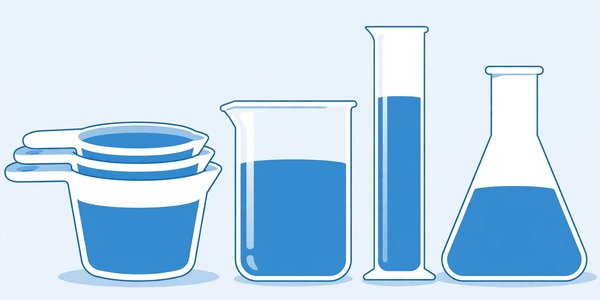
How to Use the Volume Converter
Using the converter takes less than ten seconds once you know the layout. The interface is clean and straightforward, so even if you have never converted units before, you will feel at home right away. Follow the steps below to get an accurate result every time.
- Pick the unit your value is currently in. Tap the source unit dropdown and choose from liters, milliliters, gallons, cups, fluid ounces, tablespoons, teaspoons, cubic meters, cubic feet, cubic inches, and more. If you are reading a recipe, the unit is usually printed right next to the ingredient amount.
- Type in your number. Enter the volume value in the input field. You can use whole numbers or decimals, so 2.5 or 0.75 work just as well as 10. The field accepts whatever precision your original measurement has.
- Choose the unit you want to convert to. Open the target dropdown and select the unit your task requires. Cooking with a US recipe but your measuring jug is metric? Convert cups to milliliters. Filling a fish tank rated in gallons but your bucket is marked in liters? Convert gallons to liters.
- Read the instant result. The converted value appears immediately as you type, with no button to press and no waiting. You can tweak the input and watch the answer update in real time, which is perfect when you are scaling a recipe up or down.
- Double check with reverse conversion if the number matters. For critical tasks like medicine dosing or chemical mixing, enter the result back in reverse to confirm the round trip returns your starting value. This quick sanity check takes two seconds and catches typing slips.
- Copy or note the result for your task. Keep the converted number handy while you cook, pour, or fill. Because the tool remembers your last units, repeated conversions in the same session go even faster.
- Save frequent pairs as mental shortcuts. After a few uses you will memorize the pairs you need most, like 1 cup is about 237 ml or 1 gallon is about 3.785 liters. The converter remains your source of truth for the exact figure, but these shortcuts speed up everyday estimating when precision is not critical.
To give you a head start, here are the volume pairs people look up most often. One US gallon equals 3.78541 liters, while one imperial gallon equals 4.54609 liters, so always confirm which gallon your source means. One liter equals 1.05669 US quarts and 0.264172 US gallons. One US cup equals 236.588 milliliters, one US fluid ounce equals 29.5735 milliliters, one tablespoon equals 14.7868 milliliters, and one teaspoon equals 4.92892 milliliters. On the cubic side, one cubic meter equals 1,000 liters and 35.3147 cubic feet, one cubic foot equals 28.3168 liters, and one cubic inch equals 16.3871 milliliters. Memorizing even three of these pairs makes daily life smoother, and the converter is there with exact figures whenever precision matters. Keep this list near your recipe books or workshop wall and you will rarely need to guess again.

Key Features
The Volume Converter packs professional grade accuracy into a tool anyone can use. Here is what makes it a reliable part of your daily toolkit.
- Wide unit coverage: convert between metric units like milliliters and liters, imperial units like pints and quarts, US customary cups and fluid ounces, and cubic measurements like cubic meters, cubic feet, and cubic inches, all in one place.
- Instant real-time results: the answer updates the moment you type or change a unit, so there is no submit button and no page reload slowing you down.
- High decimal precision: results keep enough decimal places for lab work and engineering while staying readable for everyday cooking and DIY projects.
- US and UK gallon support: the tool distinguishes between the US gallon and the imperial gallon, which differ by about twenty percent, so you never mix them up on international recipes or fuel calculations.
- Mobile friendly design: the layout adapts to phones and tablets, giving you big touch targets and a clear readout when you are in the kitchen or the garage with messy hands.
- No sign-up needed: there is no account to create and no personal data to hand over. Open the page, convert, and get on with your day.
- Works offline after load: once the page has loaded, the conversion logic runs in your browser, so a shaky connection will not stop you mid-recipe.
- Completely free: every conversion is free with no daily limits, no locked units, and no premium tier hiding the features you need.
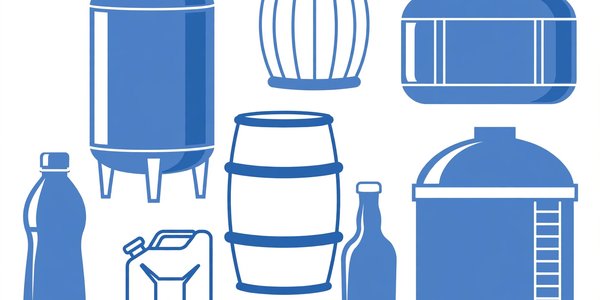
Why Use Our Volume Converter?
Volume mistakes are expensive in ways you do not notice until it is too late. A cake that called for 250 milliliters of milk but got 250 cups worth of confusion will not rise. Fuel miscalculations can leave a generator dry halfway through a job. Shipping a liquid product with the wrong cubic volume on the label can trigger surcharges or rejected freight. Our Volume Converter removes that entire category of risk.
What sets it apart is the combination of speed and trust. You are not copying numbers from a random chart found on page four of a search result. You are using a purpose built calculator that handles the exact gallon variant, the exact cubic unit, and the exact precision your task needs. Students use it to check homework, home cooks use it to rescue foreign recipes, small business owners use it for packaging and inventory, and hobbyists use it for aquariums, brewing, and 3D printing resin. One free online tool serves all of them without a learning curve.
It also respects your time and privacy. There are no popups demanding an email address, no trial countdowns, and no tracking hoops to jump through. A Tool Today built this converter to be the kind of utility you bookmark and return to for years, and that means it has to be fast, accurate, and honest every single visit.
Beyond the headline features, the converter is built for the messy reality of mixed unit life. It handles the awkward in between values that charts skip, like 0.33 cups or 1,750 milliliters, without rounding them into uselessness. It also keeps your source and target units sticky during a session, so converting a whole ingredient list from cups to grams style milliliters becomes a rhythm: type, read, next. That session memory is a small detail that saves surprising amounts of time on real tasks.
There is also a quieter benefit that regular users mention: it builds unit intuition over time. After converting liters to gallons a dozen times for fuel planning, you start to feel what 50 liters means in gallons without calculating. After rescuing enough recipes, cups to milliliters becomes second nature. The tool does not just give answers, it gradually teaches the relationships between systems, which makes you faster and more confident even when the tool is not in front of you. That is the mark of a utility done right: it makes you better at the underlying skill while remaining there for the moments you need certainty.
Tips for Best Results
A few smart habits will make every conversion flawless. Keep these tips in mind before you hit convert.
- Confirm which gallon you mean: US recipes use the US gallon (3.785 liters) while UK sources use the imperial gallon (4.546 liters). Picking the wrong one throws every downstream number off by twenty percent.
- Watch your decimal places: for cooking, one or two decimals are plenty, but for lab or fuel work keep the full precision the tool gives you and round only at the very end.
- Convert before you scale: when doubling a recipe, convert each ingredient to your preferred unit first, then multiply. Scaling in mixed units is where most kitchen errors happen.
- Use cubic units for containers: if you are sizing a tank, box, or raised bed, work in cubic meters, cubic feet, or liters of capacity rather than guessing from length measurements alone.
- Keep units consistent in a project: pick one system for the whole job, whether it is a build, a batch of soap, or a catering order, and convert everything into it up front.
- Sanity check big jumps: converting milliliters to cubic meters changes the number by a factor of a million. If a result looks wildly off, recheck the unit pair before trusting it.
One last piece of advice from experienced users: build a tiny personal cheat sheet for the conversions you repeat weekly. A sticky note on the fridge with your five most used volume pairs beats reopening the tool for the same question every Sunday. Keep the converter bookmarked for everything else, especially the odd pairs like cubic inches to milliliters that nobody memorizes. Between your cheat sheet and this free online tool, no volume question will ever slow you down again.
The converter earns its bookmark across surprisingly varied lives. A nurse double checks a milliliters to teaspoons conversion before a shift, a candle maker scales fragrance oil from ounces to milliliters for a new batch size, a traveler decants toiletries into 100 ml bottles for carry on rules, and an RV owner converts the fresh water tank from gallons to liters before a border crossing. In each story the pattern is identical: a number in the wrong unit, a moment of doubt, and an instant answer that keeps the day moving. Whatever your version of that story is, this free online tool is ready for it.
Complete List of All Free Online Tools
Browse the full directory of 450+ free tools. Click any tool name to use it instantly - no signup required.
| # | Tool Name | Category |
|---|---|---|
| 1 | A B Test Significance Calculator | Calculators & Converters |
| 2 | Acronym Generator | Utility Tools |
| 3 | Ad Copy Generator | Utility Tools |
| 4 | Add Page Numbers To PDF | PDF Tools |
| 5 | Add Subtitles To Video | Media Tools |
| 6 | Add Subtract Days Calculator | Calculators & Converters |
| 7 | Age Calculator | Calculators & Converters |
| 8 | Angle Converter | Calculators & Converters |
| 9 | API Request Tester | Utility Tools |
| 10 | Area Converter | Calculators & Converters |
| 11 | Article Rewriter | Utility Tools |
| 12 | Audio Converter | Calculators & Converters |
| 13 | Audio Merger | Media Tools |
| 14 | Audio Metadata Editor | Media Tools |
| 15 | Audio Pitch Changer | Media Tools |
| 16 | Audio Speed Changer | Media Tools |
| 17 | Audio To Text Converter | Calculators & Converters |
| 18 | Audio Trimmer | Media Tools |
| 19 | Avatar Maker | Utility Tools |
| 20 | Background Remover | Utility Tools |
| 21 | Backlink Checker | SEO Tools |
| 22 | Banner Maker | Utility Tools |
| 23 | Barcode Generator | Developer Tools |
| 24 | Base64 Encoder Decoder | Developer Tools |
| 25 | Bass Booster | Utility Tools |
| 26 | Bibliography Generator | Utility Tools |
| 27 | Bill Splitter | Utility Tools |
| 28 | Binary Converter | Calculators & Converters |
| 29 | Binary To Text Converter | Calculators & Converters |
| 30 | Birthday Countdown | Date & Time Tools |
| 31 | Bmi Calculator | Calculators & Converters |
| 32 | Bmr Calculator | Calculators & Converters |
| 33 | Body Fat Calculator | Calculators & Converters |
| 34 | Body Surface Area Calculator | Calculators & Converters |
| 35 | Book Title Generator | Utility Tools |
| 36 | Brand Color Finder | Color Tools |
| 37 | Brand Kit Generator | Utility Tools |
| 38 | Break Even Calculator | Calculators & Converters |
| 39 | Broken Link Checker | Utility Tools |
| 40 | Browser Info Checker | Utility Tools |
| 41 | Budget Planner | Utility Tools |
| 42 | Business Card Designer | Utility Tools |
| 43 | Business Card Maker | Utility Tools |
| 44 | Business Days Calculator | Calculators & Converters |
| 45 | Business Name Generator | Utility Tools |
| 46 | Business Proposal Generator | Utility Tools |
| 47 | Button Generator | Utility Tools |
| 48 | Buyer Persona Generator | Utility Tools |
| 49 | Calorie Calculator | Calculators & Converters |
| 50 | Captcha Generator | Utility Tools |
Frequently Asked Questions
Is the Volume Converter really free to use?
Yes, it is completely free with no limits. You can run as many conversions as you want, on any device, without creating an account or paying anything. A Tool Today keeps its utilities free for everyone.
How many milliliters are in a US cup?
One US cup equals 236.588 milliliters. This is the standard used in American recipes. Note that a metric cup used in some countries is 250 milliliters, so check your recipe source if the numbers seem slightly off.
What is the difference between a US gallon and a UK gallon?
A US gallon equals 3.785 liters while an imperial (UK) gallon equals 4.546 liters. The imperial gallon is about twenty percent larger. Our converter treats them as separate units so you always convert with the right one.
Can I convert cubic feet to liters?
Absolutely. One cubic foot equals about 28.317 liters. Cubic units are fully supported, so you can move between cubic meters, cubic feet, cubic inches, liters, and gallons in any direction.
How accurate are the results?
Results use precise conversion factors and display enough decimal places for technical work. For everyday use the values are more than accurate enough, and for lab grade needs you can copy the full precision shown.
Does the tool work on my phone?
Yes. The converter is fully responsive and works in any modern mobile browser. It is designed for real life situations like cooking or DIY, where your phone is the device you have at hand.
Do I need to install anything or sign up?
No installation and no sign-up. Open the page in your browser and start converting immediately. Nothing is downloaded and no personal information is collected.
Can I convert between cooking and scientific units?
Yes. Kitchen units like teaspoons, tablespoons, cups, and fluid ounces convert cleanly into scientific units like milliliters and liters, and vice versa. One US teaspoon equals 4.92892 milliliters and one tablespoon equals 14.7868 milliliters. This makes the tool handy for everything from baking to home chemistry experiments.
Table of Contents
What is Volume Converter?
The volume converter is a free online tool that helps you with volume converter tasks quickly and accurately. Our volume converter is designed to be simple, fast, and reliable. Whether you need a volume converter for personal use or professional work, this free volume converter delivers instant results without any signup or download required.
How to Use the Volume Converter
Using our volume converter is easy. Simply open the volume converter tool above, enter your input, and get instant results. The volume converter processes everything in your browser for maximum privacy and speed. No technical knowledge is needed to use this volume converter effectively.
Benefits of Using Our Volume Converter
Our free volume converter offers many advantages. It is completely free to use, requires no registration, works on all devices, and provides accurate results instantly. The volume converter is updated regularly to ensure the best performance. For more information about volume converter, you can Learn more about volume converter on Wikipedia.
Frequently Asked Questions About Volume Converter
Is the volume converter really free? Yes, our volume converter is 100% free with no hidden costs or premium tiers.
Do I need to create an account to use the volume converter? No, the volume converter works instantly without any signup or login required.
