Introduction
Choosing dog food in the USA means facing a wall of bags that all promise the same thing. This top dog foods usa guide cuts through the claims with what actually matters: real meat as the first ingredient, balanced nutrition for your dog’s age, and formulas vets commonly recommend. Price matters too, so every pick below is judged on value per meal, not just the bag price. That is why so many people search for top dog foods usa before they start.
Dogs differ as much as people do. A growing puppy, an active adult, and a slower senior need different calories, protein, and joint support, and dogs with sensitive stomachs need simpler recipes. The right food is the one your dog eats eagerly, digests well, and thrives on over months, not the one with the loudest bag. Take your time with top dog foods usa and the results will speak for themselves.

Table of Contents
- How to Choose From These Top Dog Foods USA Picks
- Quick Take on Top Dog Foods USA
- Pro Tips
- How to Read a Dog Food Label
- Nutrition by Life Stage
- Special Diets and Sensitive Stomachs
- Wet Food, Dry Food, and Raw Diets
- Feeding Routines and Portion Control
- Choosing by Budget Without Sacrificing Quality
- Frequently Asked Questions
- Final Words
How to Choose From These Top Dog Foods USA Picks
- Match the formula to life stage first, puppy, adult, or senior, since age-specific nutrition is the biggest single factor.
- Set your monthly budget and compare cost per day, not per bag, because bag sizes and feeding amounts vary widely.
- Switch over seven to ten days, mixing old and new food in rising proportions, and watch digestion and energy closely.
Quick Take on Top Dog Foods USA
Look for a named meat first on the label, an AAFCO statement for your dog’s life stage, and no vague meat meals or heavy fillers. Match the formula to age and activity, switch foods slowly over a week, and judge results by coat, energy, stool quality, and weight over a full month.
Pro Tips
- Ask your vet before choosing grain-free or limited-ingredient diets, since those suit some dogs and not others.
- Keep treats under ten percent of daily calories, because even the best food cannot fix an unbalanced treat habit.
- Store kibble sealed and cool, and note the date you open each bag, since stale food loses nutrients and taste fast.

How to Read a Dog Food Label
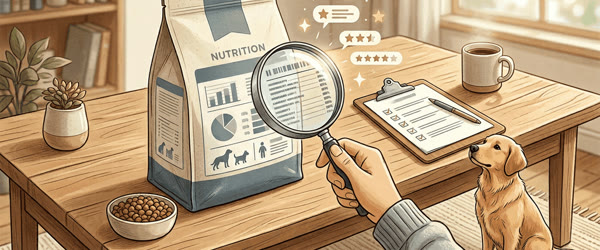
The label is the most honest part of the bag, if you know how to read it. Start with the ingredient list, which is ordered by weight. The first ingredient should be a named meat, such as chicken, beef, lamb, or salmon, not a vague term like “meat meal” or “animal by-products”. Named meats tell you exactly what protein your dog is eating, while vague terms hide the source and the quality. The first five ingredients together make up most of the food, so they should read like real food: meat, a wholesome carbohydrate, and a fat source, not a list of fillers and chemical names.
Next, find the guaranteed analysis, which lists minimum protein and fat and maximum fibre and moisture. Puppies generally need more protein and fat than adults, active dogs need more calories than couch companions, and seniors often need moderate protein with joint support. Compare foods on a dry-matter basis when moisture levels differ, because a wet food with seventy percent moisture and a dry food with ten percent moisture cannot be compared directly from the label numbers. A simple rule is that the food should meet or exceed the nutrient profiles published for your dog’s life stage, and the label should state that clearly.
Finally, look for the nutritional adequacy statement, which in the USA usually references AAFCO, the Association of American Feed Control Officials. This statement tells you the food is complete and balanced for a stated life stage, such as growth, adult maintenance, or all life stages, and whether that claim rests on feeding trials or on formulation alone. Feeding trials are stronger evidence, because the food was actually fed to dogs and monitored. A food without an adequacy statement may be a treat or a supplement, not a complete diet, and should never be a dog’s main food.
Nutrition by Life Stage
Puppies grow fast, and their food must keep up. Puppy formulas provide extra protein, fat, calcium, and phosphorus for bones and muscles, plus DHA, an omega-3 fat that supports brain and eye development. Large-breed puppies need carefully controlled calcium levels, because too much calcium can harm growing joints, so large-breed puppy formulas exist for a reason. Feed a puppy formula until the dog reaches adult size, which is around twelve months for most breeds and up to eighteen or twenty-four months for giant breeds, and follow the feeding guide on the bag as a starting point, adjusting for body condition.
Adult dogs need maintenance nutrition: enough protein to preserve muscle, enough fat for energy, and controlled calories to hold a healthy weight. Active dogs, such as working dogs and sporting breeds, burn far more calories and need energy-dense formulas, while indoor, neutered, or less active dogs need fewer calories to avoid weight gain. The difference between an active and an inactive adult dog can be hundreds of calories a day, so the feeding guide is only a starting point. Judge the amount by the dog’s waist, ribs, and energy, and adjust monthly.
Senior dogs slow down, and their food should slow with them. Senior formulas typically offer moderate protein to preserve muscle, added glucosamine and chondroitin for joints, omega-3 fats for brain and coat health, and fewer calories to match lower activity. Some seniors need more protein, not less, especially if they are losing muscle, so the old advice to restrict protein in all seniors is outdated. Watch the individual dog: a sprightly senior with good muscle needs different food from a stiff senior with arthritis. Regular vet check-ups, blood work, and weight tracking guide senior nutrition far better than any single bag claim.
Special Diets and Sensitive Stomachs
Sensitive stomachs are common, and the first step is identifying the trigger. True food allergies in dogs are usually reactions to a protein, most often beef, dairy, chicken, or wheat, while many digestive upsets come from rich food, sudden changes, or table scraps rather than allergies at all. A limited-ingredient diet, with one protein and one carbohydrate, simplifies the picture and makes triggers easier to spot. If symptoms persist beyond a few weeks, or if the dog loses weight, has bloody stool, or vomits repeatedly, a vet visit and a proper elimination diet are essential, because home guessing can miss serious problems.
Grain-free diets deserve careful thought. They became popular on the belief that grains harm dogs, but most dogs digest grains perfectly well, and grain-free foods often substitute peas, lentils, or potatoes, which bring their own questions. Veterinary cardiologists have raised concerns about a possible link between certain grain-free diets high in peas and lentils and a heart condition called dilated cardiomyopathy, though the picture is still being studied. Unless your vet recommends grain-free for a diagnosed reason, a diet with wholesome grains is usually the safer, better-studied choice. Ask your vet before choosing grain-free, and tell them exactly which food you are considering.
Weight management is the most common special need, and it is usually a matter of portions rather than magic ingredients. Overweight dogs need fewer calories, more fibre for fullness, and steady exercise, not starvation or fad diets. Measure food with a cup or a scale, cut treats to under ten percent of daily calories, and weigh the dog monthly. A loss of one to two percent of body weight per month is a safe, sustainable pace. Prescription weight-loss diets exist for dogs with significant obesity or medical issues, and your vet can advise whether one is appropriate.
Wet Food, Dry Food, and Raw Diets
Dry kibble is convenient, affordable, and good for dental health, because the crunching action helps reduce tartar. It stores well, travels well, and comes in formulas for every life stage and budget. The downsides are lower moisture, which matters for dogs that drink little, and a tendency for some dogs to eat too fast. Slow-feeder bowls and puzzle feeders solve the speed problem, and fresh water always available solves most of the moisture concern.
Wet food offers high moisture, strong aroma, and soft texture, which suits picky eaters, older dogs with dental problems, and dogs that need extra hydration. It costs more per calorie, spoils quickly once opened, and can contribute to dental plaque if no chewing or dental care balances it. Many owners mix wet and dry food, which combines the benefits: the aroma and moisture of wet food with the convenience and dental benefit of kibble. A mixed diet works well as long as total daily calories stay controlled. That small extra effort with top dog foods usa pays off in the final result.
Raw diets are the most debated option. Supporters cite shinier coats and smaller stools, while vets warn about bacterial contamination, unbalanced nutrition, and broken teeth from bones. Home-prepared raw diets are especially hard to balance, and studies repeatedly find nutritional gaps in unformulated raw recipes. If you are drawn to raw feeding, work with a veterinary nutritionist, use a commercially prepared complete raw diet, and follow strict hygiene for handling and storage. Never feed cooked bones, which splinter, and never assume that “natural” automatically means safe or complete. Once you understand top dog foods usa, the rest becomes much easier.
Feeding Routines and Portion Control
Routine matters as much as recipe. Feed puppies three to four small meals a day, adults twice a day, and seniors twice a day with adjusted portions. Regular mealtimes regulate digestion, make house training easier, and let you notice appetite changes early, which are often the first sign of illness. Put the bowl down for twenty minutes, then remove what is uneaten, rather than leaving food out all day. Free feeding makes portion control impossible and hides appetite changes that matter. Many readers find that top dog foods usa works better than expected.
Portion control starts with the feeding guide on the bag, then adjusts to the dog. The guide gives a range based on weight, and most dogs need the lower or middle part of that range, because guides tend to overestimate for less active pets. Weigh the dog monthly, feel the ribs, and look for a visible waist from above and a tuck from the side. You should feel ribs easily under a thin fat layer without pressing hard, and see a waist without prominent bones. Adjust food by ten percent at a time, wait two weeks, and reassess. Slow, steady adjustments beat dramatic cuts. The key with top dog foods usa is to stay clear and specific.
Treats and table scraps quietly wreck the best feeding plan. A single slice of cheese can be a fifth of a small dog’s daily calories, and regular scraps teach begging while unbalancing the diet. Keep treats small, count them in the daily total, and favour training treats, carrot pieces, or apple slices without seeds. If the family shares food with the dog, agree on one rule for everyone, because a dog fed by four people with four rules will always be overfed. Done carefully, top dog foods usa saves both time and effort.
Choosing by Budget Without Sacrificing Quality
Good dog food does not require the most expensive bag, but the cheapest bag is rarely good value. Compare cost per day, not per bag, by dividing the bag price by the number of days it feeds your dog at the recommended amount. A premium food with dense nutrition often costs less per day than a cheap food that requires larger portions, and it produces firmer stools and better coats that save on vet visits. Mid-priced foods from established brands with feeding trials and veterinary nutritionists on staff often offer the best balance of quality and value. Keep these basics of top dog foods usa in mind and you will avoid most mistakes.
Store brands and supermarket foods vary widely. Some meet all the basic standards and feed dogs perfectly well, while others rely on vague ingredients and heavy fillers. Judge each food by its label, not its shelf or its price: named meat first, an adequacy statement, and a manufacturer with a real address and a nutrition contact. If a company cannot tell you who formulates its food or where it is made, choose another brand. Transparency is a quality signal that costs the manufacturer nothing and tells you everything. This is exactly where top dog foods usa can help you most.
Finally, remember that the best food is the one your dog thrives on. A theoretically perfect diet that your dog refuses, vomits, or loses weight on is the wrong diet for that dog. Shortlist two or three foods that meet the label criteria, try each for a full month with a slow transition, and judge by coat shine, energy, stool quality, weight, and enthusiasm at mealtimes. Your dog’s body is the final reviewer, and its verdict outweighs any guide, including this one. A little planning around top dog foods usa goes a long way.
Frequently Asked Questions
How do I switch my dog to a new food safely? In practice, top dog foods usa is simpler than it first looks.
Switch over seven to ten days, mixing increasing amounts of the new food with decreasing amounts of the old. Start with about a quarter new food for two or three days, move to half, then three quarters, then all new. Slow transitions prevent digestive upset, and if loose stools appear, slow down and hold at the current ratio for a few extra days. A little planning around top dog foods usa goes a long way.
Is grain-free food better for dogs? This is exactly where top dog foods usa can help you most.
Not generally. Most dogs digest grains well, and grain-free diets substitute other carbohydrates that are not automatically healthier. Grain-free suits dogs with a diagnosed grain sensitivity, which is uncommon, and should be chosen with veterinary advice. For most dogs, a diet with wholesome grains is well studied and perfectly appropriate. Keep these basics of top dog foods usa in mind and you will avoid most mistakes.
How much should I feed my dog each day? Done carefully, top dog foods usa saves both time and effort.
Start with the feeding guide on the bag for your dog’s weight, then adjust by body condition. You should feel the ribs easily and see a waist, and the dog should hold a steady, healthy weight with good energy. Active dogs need more, sedentary dogs need less, and the amount should be reviewed monthly as weight and activity change. The key with top dog foods usa is to stay clear and specific.
Are expensive dog foods worth the price? Many readers find that top dog foods usa works better than expected.
Sometimes. Premium foods often use named meats, better digestibility, and feeding-trial evidence, which can mean smaller portions, better stools, and healthier coats. But price alone guarantees nothing, and some mid-priced foods outperform expensive ones. Judge by the label, the evidence, and your dog’s response, not by the price tag. Once you understand top dog foods usa, the rest becomes much easier.
When should I ask a vet about my dog’s diet? That small extra effort with top dog foods usa pays off in the final result.
Ask at every life-stage change, when switching to a special diet, and whenever you see weight loss, persistent digestive problems, dull coat, low energy, or excessive thirst. A vet can check for medical causes, recommend a suitable formula, and adjust portions to your dog’s individual needs. Diet questions are never a waste of a vet visit. Start with the basics of top dog foods usa, then build from there.
Final Words
The best dog food is the one your dog does well on, week after week. Use this guide to shortlist, switch slowly, and let your dog’s health make the final choice. That is why so many people search for top dog foods usa before they start.
Read the label with care, match the food to your dog’s age and activity, and give every change a full month before you judge it. A shiny coat, steady energy, firm stools, and a healthy weight are the signs that the choice is right, and they are worth more than any advertising claim. When in doubt, ask your vet, because a short conversation can save months of guesswork and give your dog the nutrition it truly deserves. Take your time with top dog foods usa and the results will speak for themselves.
The best dog food is the one your dog does well on, week after week. Use this guide to shortlist, switch slowly, and let your dog’s health make the final choice. In practice, top dog foods usa is simpler than it first looks.
Leave a Reply